
Industrial manufacturing environments operate at the intersection of productivity pressure and technical complexity in ways that make power infrastructure decisions genuinely consequential. The wrong generator specification, an incompatible transfer switch, or an electrical distribution system that was never evaluated for backup power integration can all undermine a plant’s ability to maintain production continuity during an outage. Understanding what industrial power systems actually require — and working with a partner equipped to source the right equipment — is how manufacturing plants avoid those costly surprises.
The Generator Requirements Unique to Industrial Manufacturing
Standard commercial generators are designed for a load profile that is relatively stable and primarily resistive — office buildings, retail spaces, and light commercial facilities. Industrial manufacturing environments present a fundamentally different challenge. The combination of large motor loads, variable frequency drives, and sensitive electronic equipment creates a power environment where generator selection requires more than choosing an appropriately rated kilowatt output.
For manufacturing plants, generators must be specified with motor starting capability in mind. During the transition from grid power to backup power, every motor that was running will attempt to restart simultaneously, creating a starting current surge that can be significantly higher than the steady-state running load. A generator rated for the running load alone may trip its overcurrent protection during this starting surge, leaving the facility dark despite having a backup power system in place.
Generator Features Specifically Valuable in Manufacturing Applications
- High motor starting capability: Generators rated for industrial motor starting loads rather than just running loads
- Low THD output: Critical for protecting variable frequency drives, PLCs, and precision measurement systems
- Automatic load sequencing capability: Controls that stage motor restarts to prevent simultaneous starting surge
- Wide ambient operating temperature rating: Consistent performance across the temperature range the installation location experiences
- Comprehensive remote monitoring: Real-time status visibility without requiring on-site personnel to check system readiness
How Manufacturing Plants Have Evolved Their Power Infrastructure Thinking
There has been a noticeable shift in how manufacturing plant operators think about power infrastructure over the past several years. The increasing frequency of grid disruptions, combined with the growing sensitivity of manufacturing equipment to power quality, has moved backup power from a compliance checkbox to a genuine operational priority. Manufacturing plants that previously maintained only partial-load backup capability are now evaluating full-facility standby systems that protect every aspect of production continuity.
This shift is driving more sophisticated procurement decisions. Rather than purchasing the least expensive generator that meets a minimum kilowatt requirement, sophisticated manufacturing operators are evaluating total cost of ownership, power quality specifications, service network availability, and integration compatibility with existing electrical infrastructure. That more rigorous evaluation process benefits from a knowledgeable distribution partner who can explain the trade-offs between different manufacturer approaches.
Questions Manufacturing Operators Should Ask Before Purchasing a Generator
- What is the total running load and the peak starting load, including all motors?
- What are the power quality requirements of the most sensitive equipment in the facility?
- What fuel type is most practical given the facility’s location and storage capacity?
- What automatic transfer switch configuration best fits the facility’s electrical distribution design?
- How will the system be monitored and maintained, and is the manufacturer’s service network accessible?
Catawba Power and Lighting’s Approach to Manufacturing Power Projects
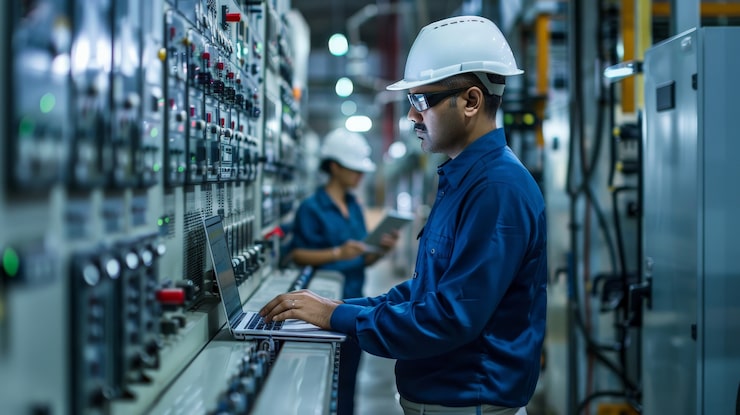
Catawba Power and Lighting serves manufacturing clients as a strategic infrastructure partner with the technical background to help answer those questions before equipment is purchased. The company’s access to specification-grade commercial and industrial generator systems through strategic manufacturer relationships means the right equipment can be sourced for each specific application rather than adapted from whatever happens to be available.
As a Native American-owned distribution company, Catawba brings tribal procurement advantages that matter for tribal manufacturing operations and federal diversity supplier programs. The company’s direct-ship distribution capability supports manufacturing sites across the country, and its infrastructure-level expertise in electrical systems means clients receive guidance that goes beyond catalog selection.
Conclusion
Industrial manufacturing plants deserve backup power solutions that are specified with full understanding of their unique load characteristics and power quality requirements. Generators sourced with that understanding, through a knowledgeable Native-owned infrastructure partner, protect production continuity in ways that generic procurement processes consistently fail to deliver. Catawba Power and Lighting is built to serve that need — with the expertise, product access, and procurement credentials that manufacturing operations require.