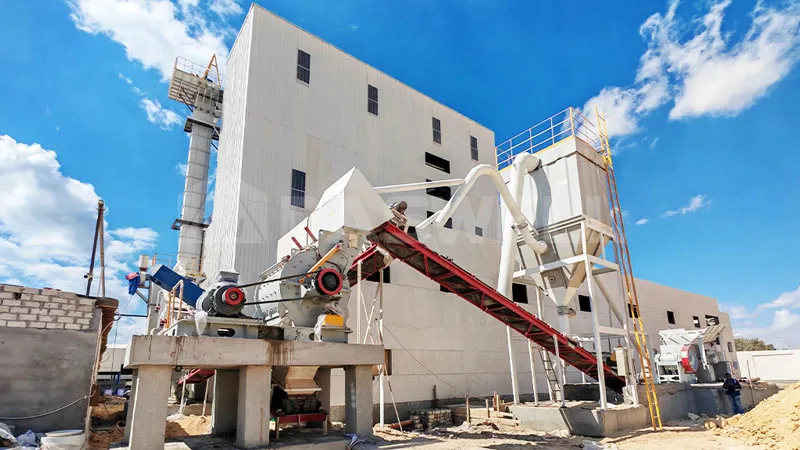
Industries across the world depend on high-quality mineral fillers to improve product performance, durability, and cost efficiency. A modern calcium carbonate plant plays a major role in supplying these essential materials for industries such as paper, plastics, paints, rubber, pharmaceuticals, and construction. With advanced grinding technology and efficient processing systems, manufacturers can now achieve superior particle size control, higher purity levels, and environmentally responsible production.
As industrial demand continues to grow, businesses are looking for reliable manufacturing partners that offer customized solutions and consistent product quality. Advanced calcium carbonate processing facilities help companies meet strict industrial standards while reducing operational costs and improving productivity.
Understanding Calcium Carbonate Manufacturing
Calcium carbonate is a naturally occurring mineral widely used as a filler and coating material. It is mainly derived from limestone, marble, and chalk deposits. The manufacturing process involves crushing, grinding, classifying, and surface treatment to produce fine and ultra-fine powders suitable for industrial applications.
Modern production systems use advanced grinding mills and classifiers to achieve specific particle sizes required by different industries. High-quality processing ensures that the final product offers excellent whiteness, purity, and dispersion properties.
Industries prefer professionally engineered grinding solutions because they improve production efficiency and ensure stable product quality. Manufacturers that invest in advanced equipment often deliver better consistency and lower energy consumption.
Importance of High-Purity Industrial Fillers
High-purity calcium carbonate fillers are essential for maintaining product quality in several manufacturing sectors. The purity and particle size directly affect the final product’s performance, appearance, and durability.
Paper Industry
In paper manufacturing, calcium carbonate improves brightness, smoothness, and printability. It also helps reduce production costs by replacing expensive raw materials.
Plastic Industry
Plastic manufacturers use calcium carbonate fillers to improve rigidity, dimensional stability, and surface finish. It also helps reduce material costs without compromising product quality.
Paints and Coatings
In paints and coatings, calcium carbonate enhances opacity, weather resistance, and coating consistency. Fine particle distribution creates smoother finishes and better coverage.
Construction Industry
Construction companies use calcium carbonate in cement, adhesives, sealants, and flooring products. The mineral improves strength, durability, and workability.
Advanced Processing Technology in Modern Plants
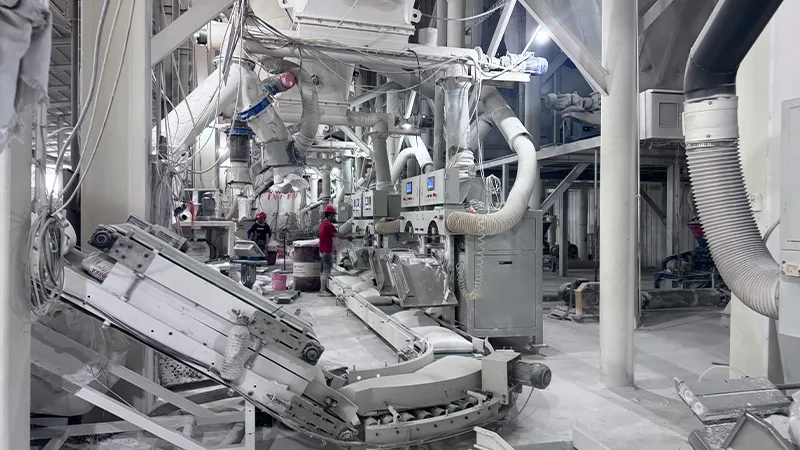
Modern mineral processing facilities rely on automated systems and precision engineering to maintain consistent quality standards. Advanced grinding systems are designed to achieve ultra-fine powder production with minimal contamination.
These technologies improve efficiency and reduce energy consumption. Automated monitoring also helps manufacturers maintain accurate particle size distribution and product uniformity.
Many industrial buyers now prefer suppliers operating technologically advanced calcium carbonate plants because they offer greater production reliability and customized material solutions for specialized applications.
Sustainable and Environmentally Responsible Production
Sustainability has become a major focus in industrial manufacturing. Modern mineral processing facilities are implementing environmentally responsible practices to reduce emissions, waste generation, and energy usage.
Advanced grinding mills consume less electricity while delivering higher output. Efficient machinery lowers operational costs and minimizes environmental impact.
Dust Control Systems
Modern dust collection systems improve workplace safety and reduce air pollution. Proper filtration systems also help companies comply with environmental regulations.
Manufacturers now use optimized production techniques to minimize material waste and maximize raw material utilization. This improves overall production efficiency.
By using advanced automation and energy-saving technologies, manufacturers can significantly reduce their carbon footprint while maintaining high productivity levels.
Sustainable processing not only benefits the environment but also enhances long-term business profitability.
Customized Solutions for Different Industries
Every industry has unique material requirements. Modern processing facilities offer customized manufacturing solutions tailored to specific industrial applications.
- Paper manufacturers may require ultra-fine particles with high brightness.
- Plastic manufacturers may need coated calcium carbonate for better polymer compatibility.
- Paint manufacturers may require precise particle size distribution for smooth coatings.
Customized processing allows manufacturers to meet exact customer specifications and improve product performance across various industries.
Reliable suppliers also provide technical support and consultation to help clients select the right material grades for their production needs.
Benefits of Choosing an Advanced Manufacturing Facility
Selecting a reliable calcium carbonate supplier offers several long-term benefits for industrial buyers.
- Advanced production systems ensure stable quality and uniform particle distribution, helping manufacturers maintain reliable production standards.
- Efficient grinding and classification systems improve output capacity while reducing downtime and maintenance requirements.
- High-quality fillers reduce raw material expenses and improve production efficiency, resulting in lower overall manufacturing costs.
- Experienced manufacturers provide professional guidance for product selection, process optimization, and application development.
- Leading suppliers follow strict quality control procedures and comply with international manufacturing standards, ensuring dependable product performance.
Applications Across Multiple Industries
Calcium carbonate fillers are widely used in various sectors due to their versatility and cost-effectiveness.
Common Applications Include:
- Paper coating and filling
- Plastic compounding
- Paint manufacturing
- Rubber production
- Adhesives and sealants
- Ceramic products
- Pharmaceutical tablets
- Food additives
- Construction materials
The growing demand for high-performance industrial fillers continues to drive innovation in processing technology and product development.
Future Trends in Calcium Carbonate Processing
The future of calcium carbonate manufacturing focuses on automation, sustainability, and product specialization. Companies are investing in smart manufacturing systems to improve efficiency and reduce production costs.
As industries demand higher-quality materials, manufacturers must continue adopting innovative technologies to remain competitive in the global market.
Conclusion
A high-performance calcium carbonate manufacturing facility plays a vital role in supplying industries with reliable, high-purity mineral fillers. Advanced grinding technology, sustainable processing methods, and customized production capabilities help manufacturers meet the evolving needs of industries such as paper, plastics, paints, and construction.
By investing in modern processing systems and environmentally responsible practices, manufacturers can deliver superior product quality while improving operational efficiency. Businesses looking for dependable industrial filler solutions benefit greatly from working with experienced suppliers that prioritize innovation, consistency, and customer satisfaction.
FAQ
- What industries use calcium carbonate fillers?
Calcium carbonate fillers are commonly used in paper, plastics, paints, rubber, construction, pharmaceuticals, and adhesives industries.
- Why is high-purity calcium carbonate important?
High-purity calcium carbonate improves product quality, brightness, durability, and performance while reducing manufacturing costs.
- How do modern processing plants improve production efficiency?
Modern plants use advanced grinding systems, automation, and energy-efficient equipment to achieve consistent quality, lower energy consumption, and higher productivity.